
Healthcare AI & ERP / Patients and access
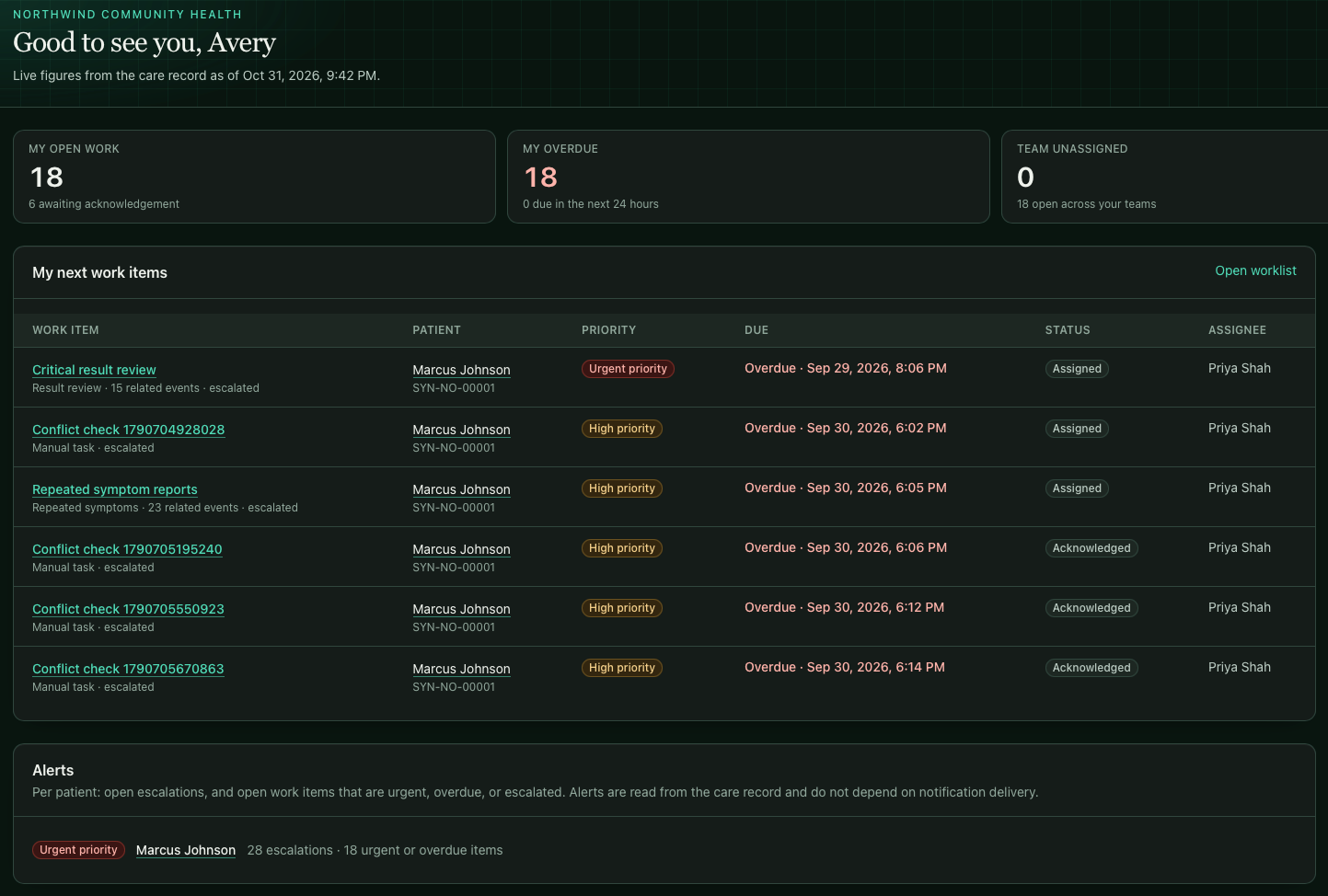
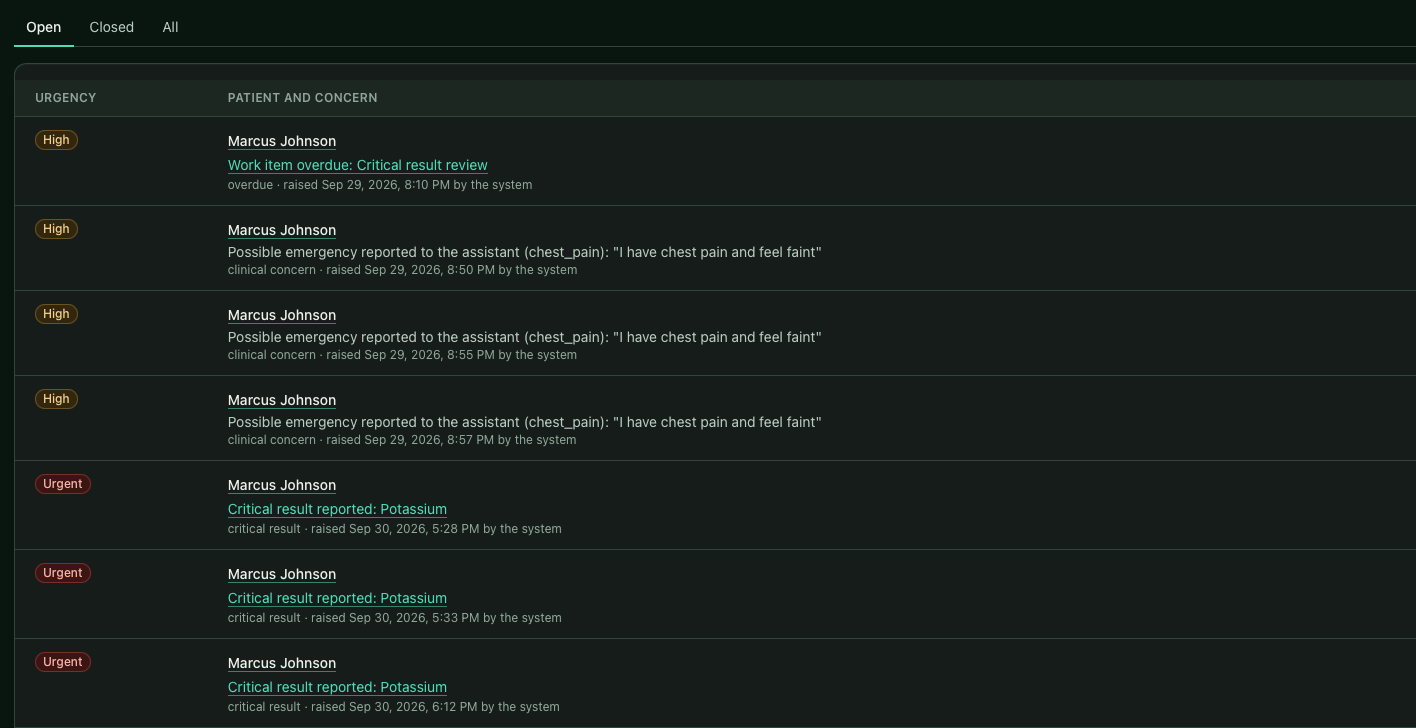
The AI Care Management Assistant is a complete care-management application for organizations that run chronic-care programs. It brings care plans, medication schedules, appointments, patient check-ins, reminders, outreach, escalations and program reporting into one place. When something needs attention, such as a patient being discharged, missing an appointment, reporting repeated symptoms or falling behind on medication, versioned rules create a work item, rank it with an explainable priority score and route it to the right member of the care team. If it goes overdue, it escalates to a supervisor.
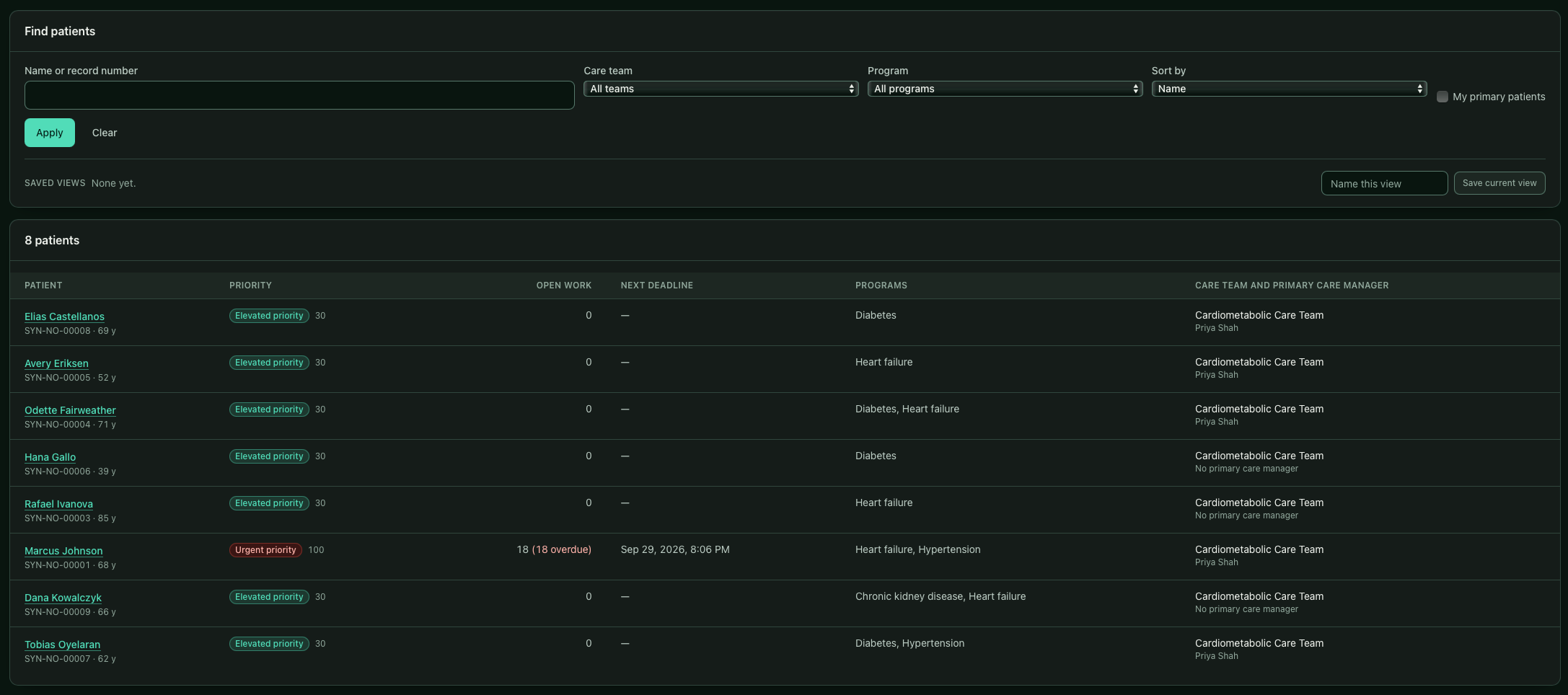
It serves four groups. Care managers get a prioritized worklist, patient search with saved views and a full patient record. Clinical supervisors approve care-plan changes, resolve escalations, rebalance workload and read program reports. Administrators manage members, teams, content, rules and integrations, but by design get no automatic access to clinical records. Patients get a plain-language portal with larger controls, where they complete check-ins, contact their care team and choose how and when they want to be reached. The natural customer is a health system, medical group or health plan running care-management or chronic-disease programs.
The AI assistant answers only from clinically reviewed content and the patient's own care plan. Every sentence it writes cites a verbatim quote from an exact source version. Questions it can't support are handed to the care team instead of guessed at, urgent symptoms are routed by a safety rule before any AI model runs, and requests for a diagnosis or treatment are declined. Care-team summaries stay drafts until a person accepts them. Underneath, it is a FastAPI back end with a durable background worker and a Next.js front end, with database row-level security, MFA-protected sign-in, an append-only audit trail, FHIR R4 data import from EHRs, and email and SMS outreach that checks consent and quiet hours at the moment of sending.
The project was delivered in five documented stages: platform and security, care-management workflow, full front end, integrations, and release engineering. A 40-case evaluation suite gates every release, with 35 critical safety and authorization cases that must pass, and the interface is tested against WCAG 2.2 AA accessibility standards. Infrastructure for dev, staging and production is written in Terraform and validated, along with runbooks, backup-restore and resilience drills, and load tests. It is not yet deployed and uses synthetic data only. Using it with real patients requires clinical approval of its rules, privacy and security review, and provider agreements, all tracked as named release gates.
Start a free trial
Fill in the details below and we'll set up your free trial of AI Care Management Assistant on synthetic data and email you access.