
Healthcare AI & ERP / Operations and research
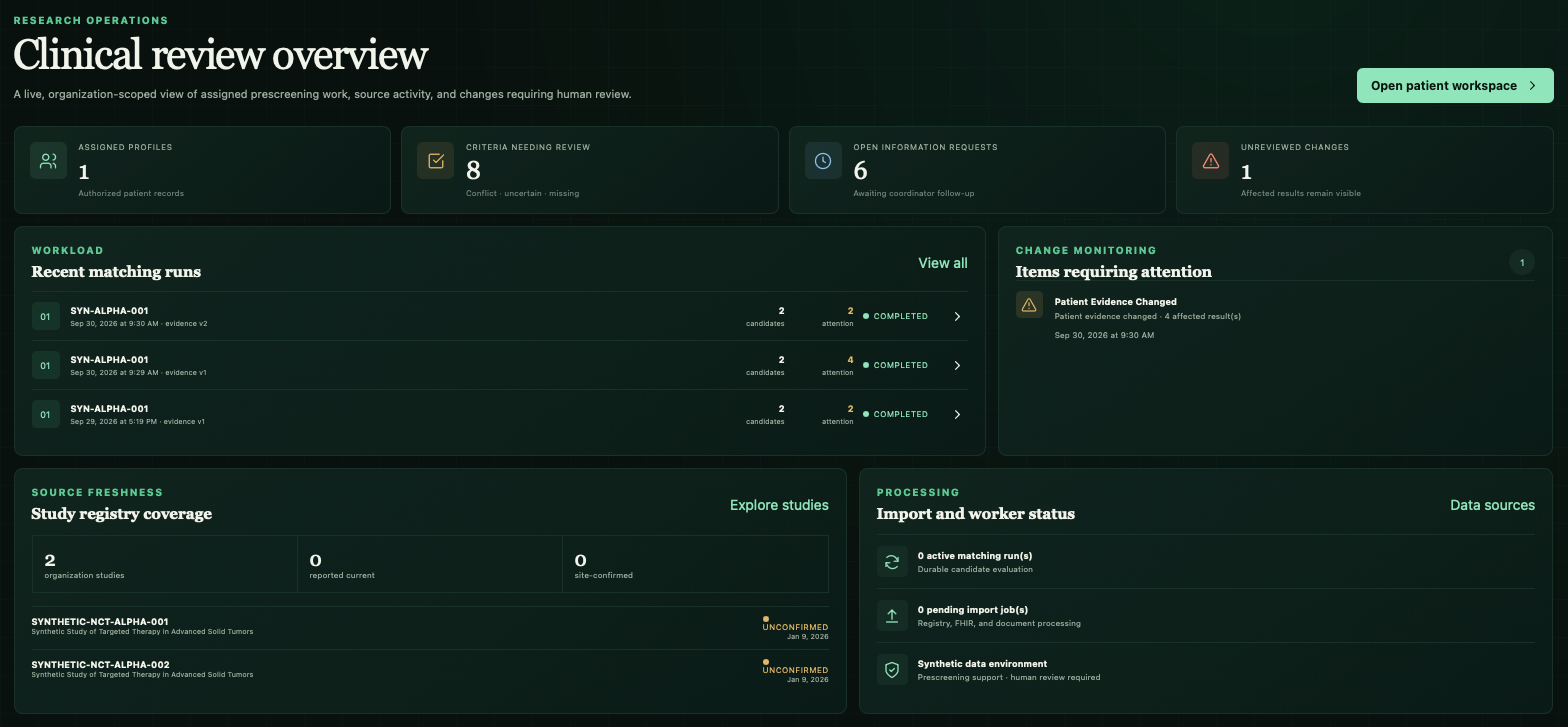
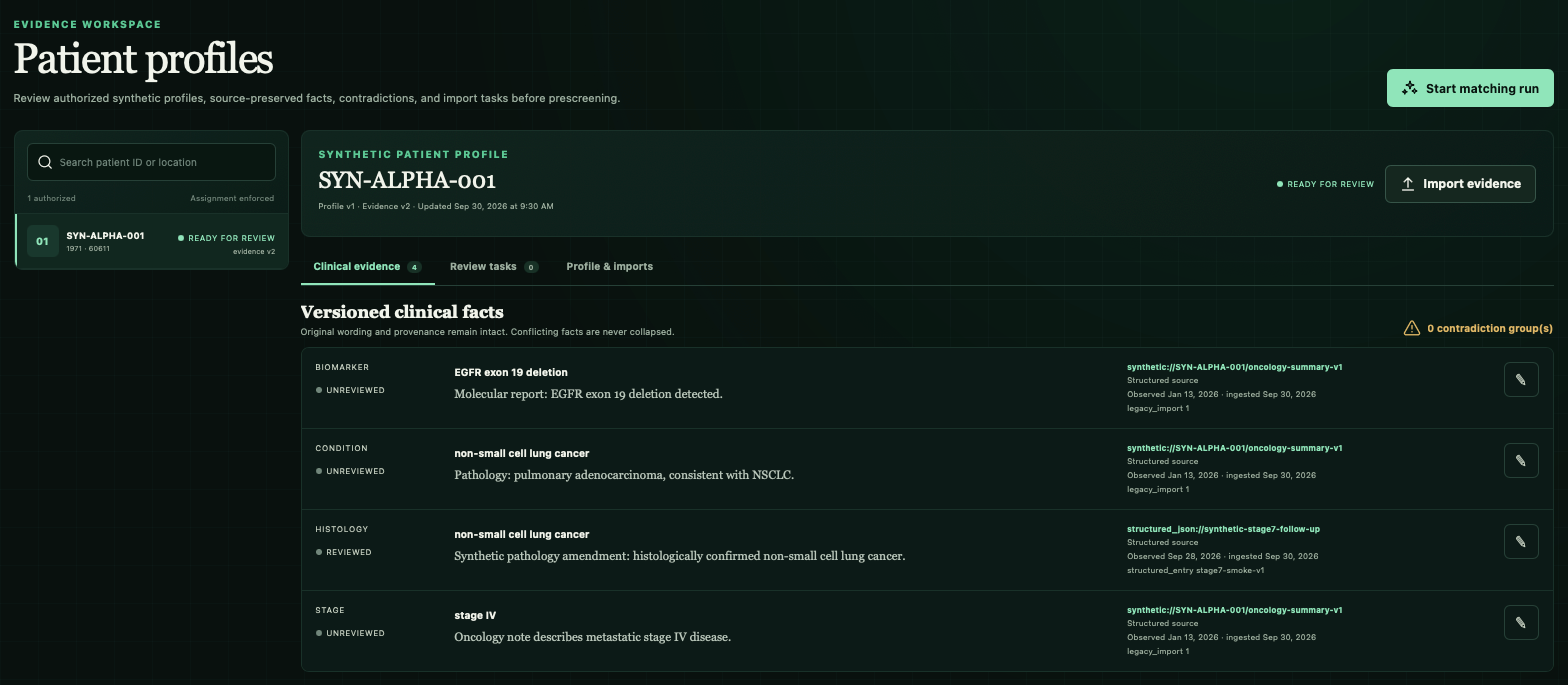
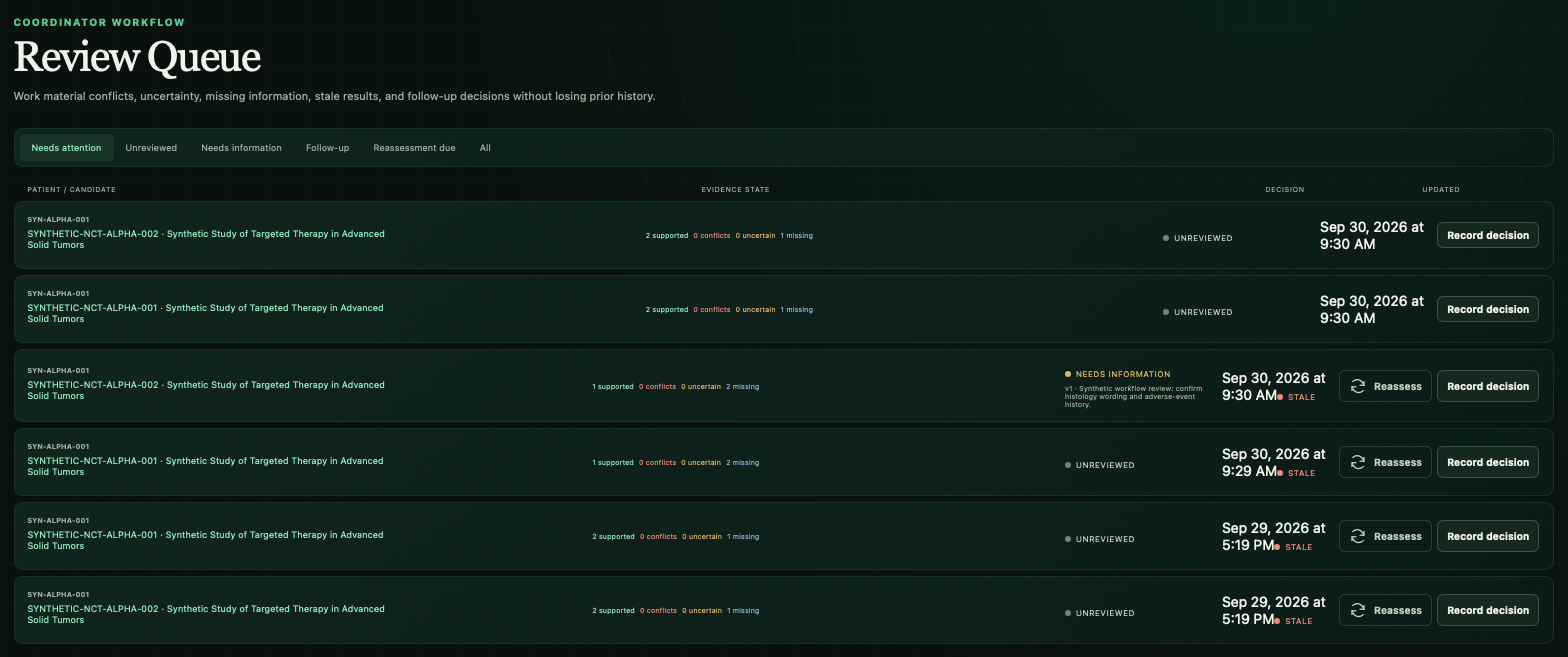
Finding patients for clinical trials is slow, manual work: coordinators read long eligibility criteria and compare them line by line against a patient's chart. AI Clinical Trial Matching automates that groundwork. It imports patient evidence from FHIR R4 records, structured files or PDF and text documents, pulls study criteria and site details from ClinicalTrials.gov, and checks each patient against each criterion. The result is a ranked list of candidate studies with a criterion-by-criterion explanation: which requirements are met, which are not, which are missing information, and which need an investigator's judgment.
The workspace is built for research coordinators who screen patients, clinical reviewers who confirm or override matches, administrators who manage access and data sources, and auditors who review sensitive access. Coordinators and reviewers see only the patients and projects assigned to them, and administrator status alone does not grant access to patient records. For a hospital, cancer center or research network, the value is faster prescreening, fewer missed candidates and a clear record of why every decision was made.
The AI's role is narrow and deliberate. A language model on AWS Bedrock helps turn free-text eligibility criteria into structured logic, preserving nested conditions, exclusions, timing windows, units and treatment sequences, but it only ever sees public trial text, never patient data. A person reviews those interpretations before they are used, and the matching itself is done by a deterministic evaluator, so the same inputs always produce the same answer. Every run is pinned to the exact patient facts, trial version and reference date, so results can be reproduced later. When a trial's criteria or status changes on ClinicalTrials.gov, the affected results are flagged automatically.
Results are framed as research review, not final eligibility decisions or permission to contact a patient. A synthetic evaluation suite covers inclusion and exclusion logic, missing evidence, unit conversion, stale values, contradictory evidence and prompt-injection text hidden in documents, and the system scores perfectly on it. Separate automated tests cover model outages, invalid citations and data isolation between organizations. The documentation is candid that this validates the software's behavior, not its clinical accuracy: a clinician-authored, representative evaluation set is a stated prerequisite before real use. The platform also includes staff MFA, a restricted audit history, durable background jobs and AWS reference infrastructure.
Start a free trial
Fill in the details below and we'll set up your free trial of AI Clinical Trial Matching on synthetic data and email you access.