
Healthcare AI & ERP / Operations and research
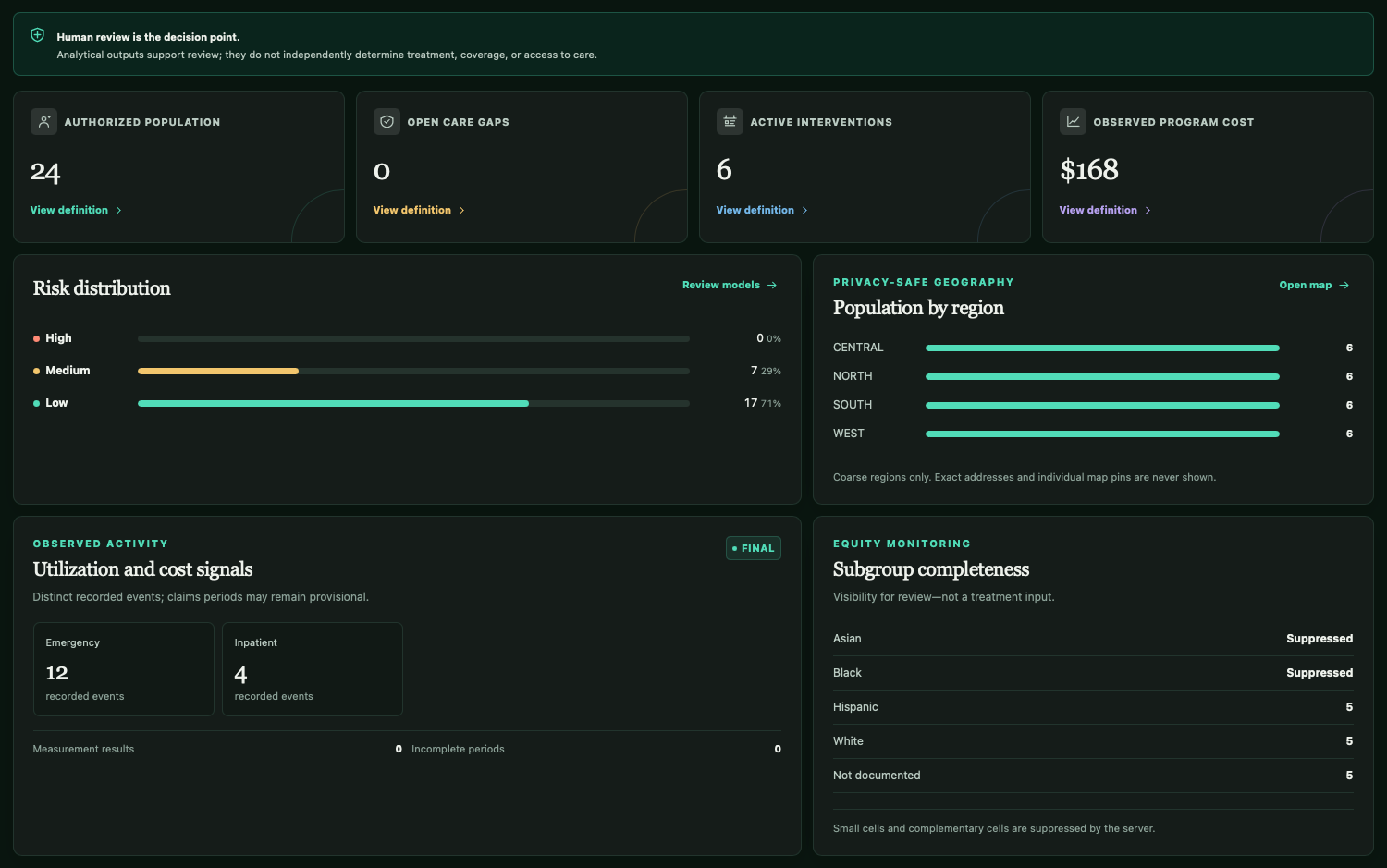
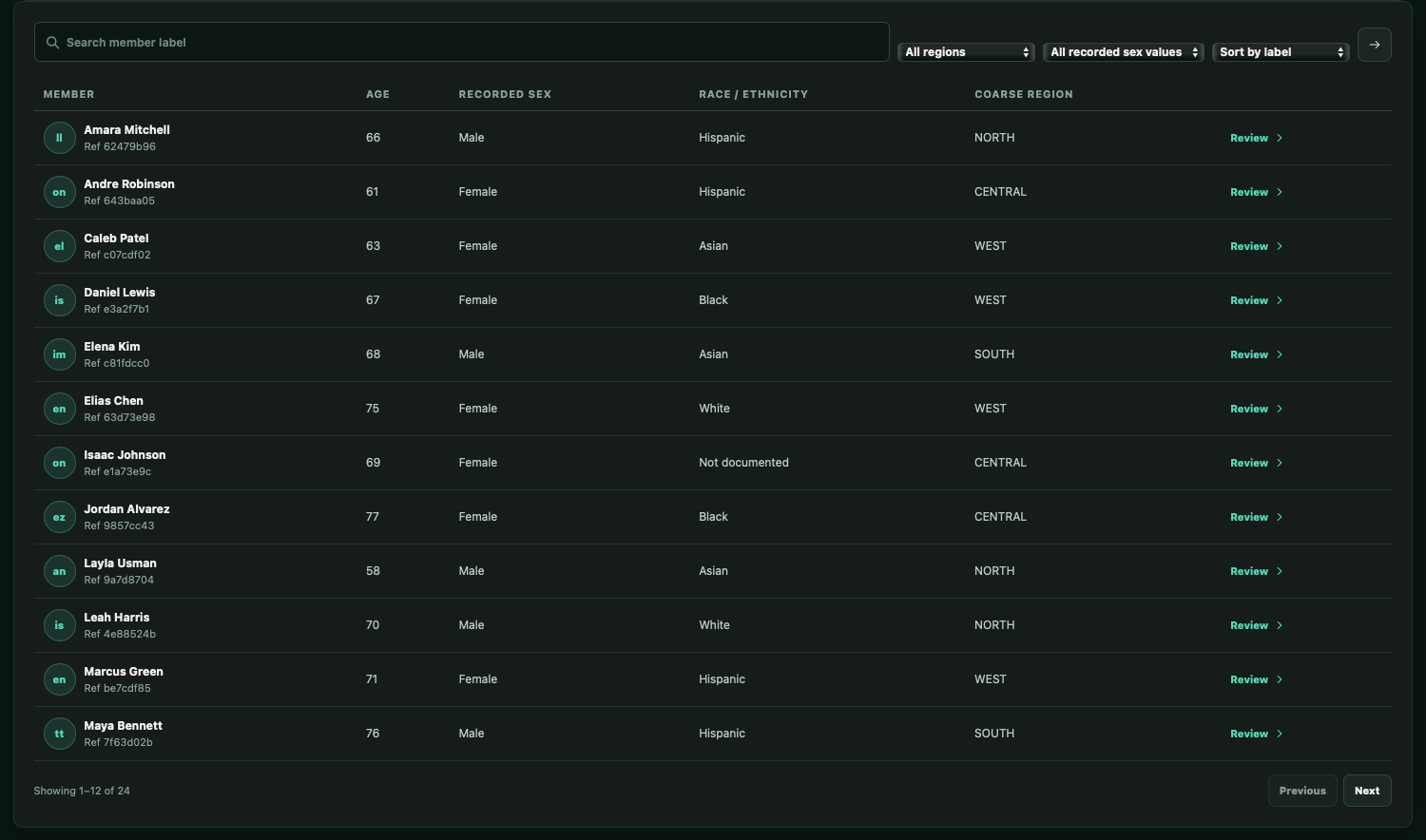
The AI Population Health Platform combines clinical records, insurance claims, enrollment data, social-factor data and geographic data into one workspace for managing the health of an entire patient population. Teams can define patient groups (cohorts), see risk across those groups, find care gaps such as missed screenings with the evidence behind each one, launch and track interventions, measure outcomes and costs, and produce executive reports. It has eleven modules: Overview, Cohorts, Population Explorer, Risk Analysis, Care Gaps, Geographic Insights, Interventions, Outcomes and Costs, Reports, Data Quality, and Administration.
It is built for the teams responsible for population health at health systems, accountable care organizations and health plans: analysts who build cohorts and study trends, care managers who follow up with patients, clinical reviewers who approve consequential actions and publications, and executives who need summaries they can trust. Each person sees only what their role, organization, program and patient-access scope allow, and administrators manage configuration without automatically seeing clinical data.
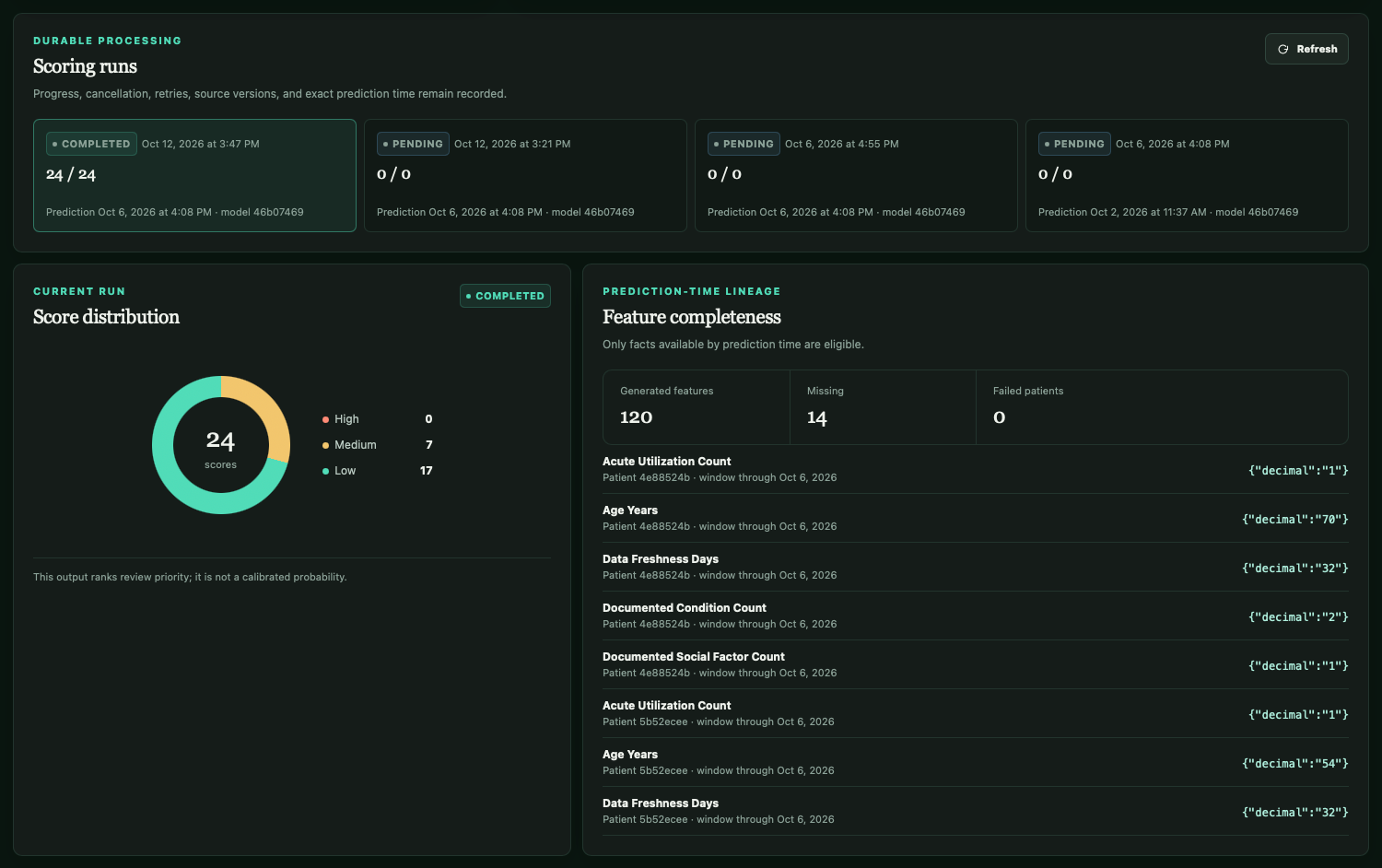
Reproducibility and governance are central. Cohort definitions are written in a validated rule language and compiled into safe database queries; the system never runs SQL written by a user or an AI model. Each cohort snapshot is frozen with its definition, data cutoffs and source versions, so any number can be traced and reproduced later. Six versioned risk pipelines distinguish priority rankings from true probabilities and keep the factors behind every score. AI-written executive summaries are generated only from privacy-filtered aggregate metrics, every number in them must match a stored metric, and a second human review is required before publication. Small groups are automatically suppressed in geographic and subgroup views to protect privacy.
The platform supports decisions but does not make treatment, coverage or access-to-care decisions; consequential actions require an authorized reviewer. Program comparisons are presented as descriptive, with their limitations stated, rather than as proof of cause and effect. It connects to EHRs through FHIR R4, including the Bulk Data export protocol, and accepts versioned claims and enrollment feeds, setting aside invalid rows and uncertain patient matches rather than guessing. A presentation mode lets reviewers explore the full product from different staff perspectives using privacy-safe reference records, and that mode is blocked in staging and production. The project includes a threat model, permission matrix, model card, metric catalog and release evidence.
Start a free trial
Fill in the details below and we'll set up your free trial of AI Population Health Platform on synthetic data and email you access.