
Multicloud AI & ERP / Cloud & AI Security, Governance & Compliance
Why it matters
Vulnerability backlogs grow faster than teams can patch. Fixing in the order findings arrive wastes effort; fixing by exposure and exploitability reduces real risk fastest.
How it works
A continuous loop
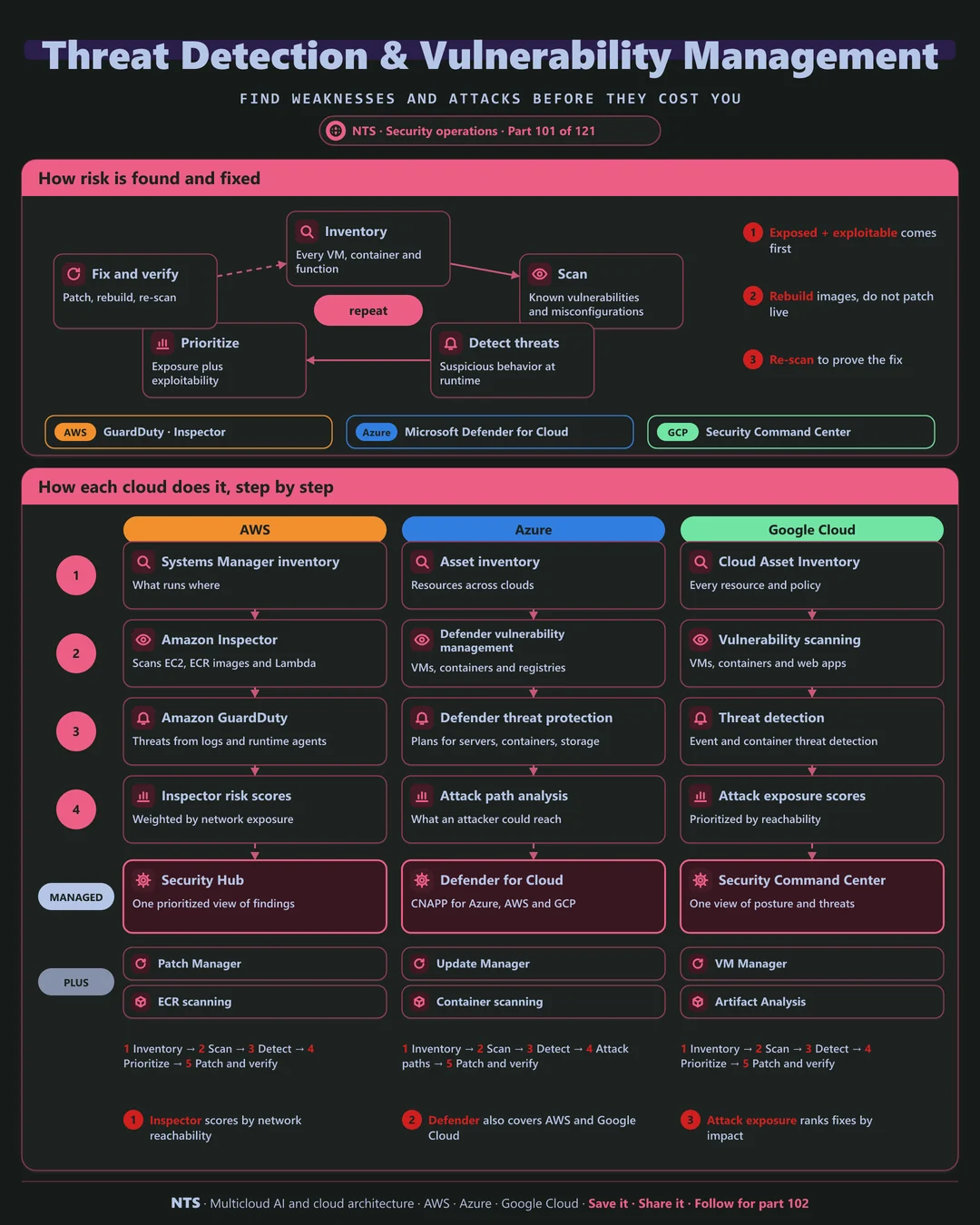
Inventory every VM, container and function. Scan for known vulnerabilities and misconfigurations. Detect suspicious behavior at runtime. Prioritize by exposure and exploitability, then fix and verify by rebuilding images and re-scanning.
AWS, Azure and Google Cloud compared
| AWS | Azure | Google Cloud | |
|---|---|---|---|
| Vulnerability scanning | Amazon Inspector | Defender vulnerability management | Vulnerability scanning in SCC, Artifact Analysis |
| Threat detection | Amazon GuardDuty | Defender for Cloud plans | Event and Container Threat Detection |
| Risk prioritization | Inspector risk scores, Security Hub | Attack path analysis | Attack exposure scores |
| Patching | Systems Manager Patch Manager | Azure Update Manager | VM Manager |
| Container image scanning | ECR scanning | Defender for containers | Artifact Analysis |
What makes each cloud different
AWS
Amazon Inspector scans EC2, ECR images and Lambda functions and weights findings by network reachability, while GuardDuty detects threats from logs and runtime agents.
Azure
Microsoft Defender for Cloud covers Azure, AWS and Google Cloud, with attack path analysis showing which vulnerabilities an attacker could actually chain together.
Google Cloud
Security Command Center combines vulnerability and threat findings and ranks them with attack exposure scores based on what is reachable from the internet.
Design decisions that matter
- 01Fix exposed and exploitable first
Not by finding date.
- 02Rebuild, do not patch live
Golden images and containers.
- 03Scan in the pipeline
Block critical issues before deploy.
- 04Verify every fix
Re-scan and close the loop.
Common mistakes we see
- Patching by severity score alone. Ignores real exposure.
- Scanning production only. Vulnerable images keep shipping.
- No owners for findings. Backlogs never shrink.
A practical 30-day plan
- Week 1
Enable scanning across all accounts.
- Week 2
Rank findings by exposure.
- Week 3
Fix the top internet-exposed issues.
- Week 4
Add pipeline scanning and owner SLAs.
How NTS helps
NTS runs vulnerability and threat management programs on AWS, Azure and Google Cloud, covering tooling, risk-based prioritization, pipeline scanning and remediation support.
What you get
- Threat detection across accounts, workloads and containers
- Vulnerability scanning for servers, images and code
- Risk-based prioritization of findings
- Remediation workflows with owners and deadlines
Typical outcomes
- Faster patching of critical vulnerabilities
- Fewer exploitable weaknesses
- Clear risk reporting for leadership
How we work with you
- 1Assess
A focused review of your threat detection and vulnerability management across AWS, Azure and Google Cloud. We look for the gaps we find most often: patching by severity score alone, scanning production only and no owners for findings.
- 2Design
A target architecture and roadmap built on the decisions that matter most: fix exposed and exploitable first, rebuild, do not patch live, scan in the pipeline and verify every fix.
- 3Build
Hands-on delivery alongside your team. We enable scanning across all accounts, rank findings by exposure, fix the top internet-exposed issues, and finally add pipeline scanning and owner SLAs.
- 4Run and improve
We track remediation progress, tune detections and report risk trends monthly.
Why teams choose NTS for threat detection and vulnerability management
- Focus on real risk
We prioritize vulnerabilities that are exposed and exploitable.
- Fixes that happen
Clear owners and deadlines turn findings into closed tickets.
- Full coverage
From code to cloud to containers.
Book a free 30-minute review
Talk to an NTS architect about your threat detection and vulnerability management on AWS, Azure and Google Cloud.